
A payment API is an interface that lets a business’s website, app, or back office system send payment requests to a gateway, processor, or bank and get a result back. It handles authorization, refunds, payouts, and status updates, so the business does not have to build direct bank connections.
Every time a customer clicks “Pay,” an API call fires. Within seconds, the system validates the payment details, routes the request to the right network, collects the bank’s approval or decline, and returns a confirmation. A payment API powers that entire exchange.
A payment API lets one software system send payment requests to another, so a business can accept, route, and settle money without building every bank connection itself. For money service businesses (MSBs), it removes manual handling between the transfer platform and its payment partners. Remit Anywhere builds its remittance software API-first, with integrations across banks, payment processors, payout partners, compliance providers, and accounting systems.
Key Takeaways
- A payment API connects your software to the gateways, processors, and banks that move money.
- The API is the interface. The payment gateway is the service behind it that authorizes and routes the transaction.
- Idempotency keys stop duplicate charges when a request is retried.
- Hosted payment pages and tokenization can keep you eligible for the lighter PCI DSS SAQ A instead of SAQ D.
- Remittance businesses also need KYC, AML screening, and payout routing, which a card-only API does not provide.
Payment API Definition: How the Interface Works?
An API is an interface that lets two pieces of software communicate. A payment API connects a business’s website, app, or back-office system to the services that move money: gateways, processors, card networks, banks, and alternative payment methods, from cards and wallets to bank transfers.
What a Payment API Can Do?
Instead of building direct connections to every bank and network, a business gets one documented interface. Through it, the business can:
- Collect payment details and send them for authorization
- Replace card data with secure tokens
- Issue refunds and voids
- Schedule recurring and subscription charges
- Send payouts to bank accounts or wallets
- Retrieve transaction status and reports in real time
Why Payment APIs Matter?
MuleSoft’s 2025 Connectivity Benchmark Report found that APIs and API-related implementations account for about 40% of company revenue, according to IT leaders, up from 25% in 2018. Reliability matters too: the Uptrends State of API Reliability 2025 report found that average API uptime fell from 99.66% to 99.46% between Q1 2024 and Q1 2025, so check a provider’s published uptime.
How Does a Payment Processing API Work?
Most payment processing APIs follow the same sequence.
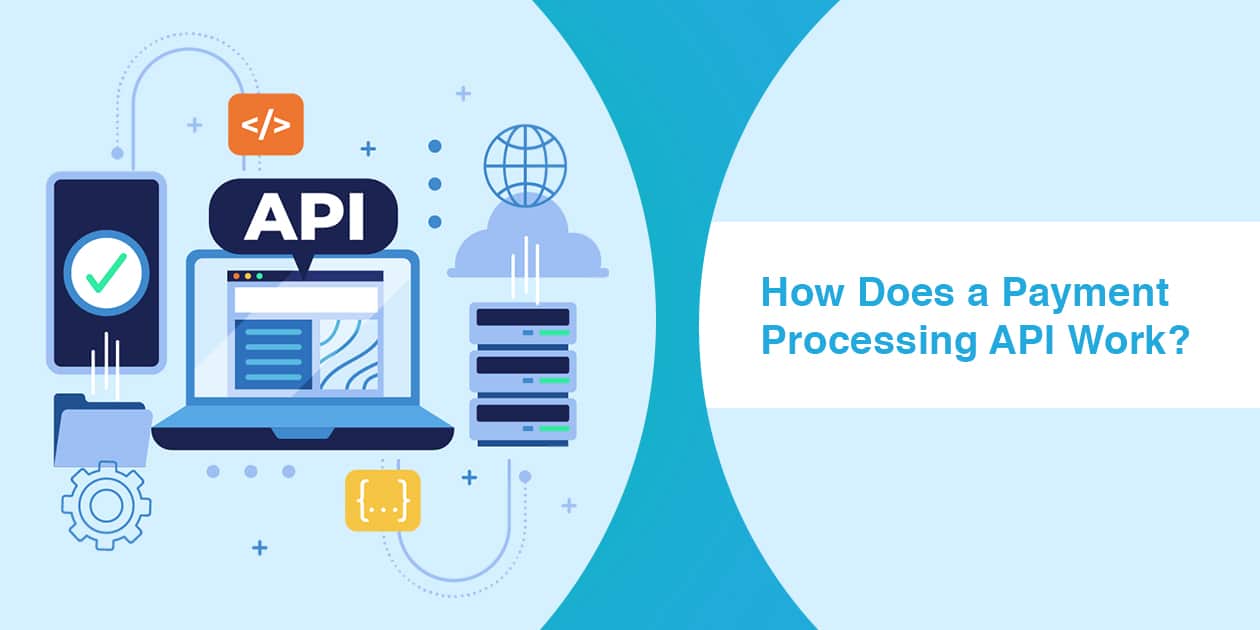
The Seven-Step Payment Flow:
- Checkout starts. The customer enters payment details in a hosted form or client-side SDK, and the browser tokenizes the card data, so raw numbers never touch the merchant’s servers.
- The merchant’s server sends an authorization request. It calls the API with the token, amount, currency, merchant identifier, and an idempotency key, signed with secret credentials.
- The gateway routes the request. It selects the processor or acquirer, which forwards the request to the card network as an ISO 8583 message, the standard format for card transactions.
- The issuing bank decides. It checks funds, fraud signals, and risk rules, then approves or declines.
- The response returns. An authorization code or decline reason travels back, and the customer sees success or failure.
- Settlement happens. The merchant captures approved transactions, and funds move to its acquiring bank.
- Webhooks report events. The provider pushes notifications (authorized, captured, refunded, disputed), so the merchant does not need to poll.
Chargebacks and Disputes After Settlement
A cardholder can dispute a charge with the issuing bank, which sends a chargeback through the card network. The provider notifies the merchant, usually by dispute webhook, and the merchant submits evidence before the network’s deadline. A good payment API exposes disputes as data, and 3D Secure can shift liability for some fraud chargebacks away from the merchant.
Payment API vs. Payment Gateway: What Is the Difference?
| Payment API | Payment Gateway | |
| What it is | A software interface that developers call | A service that authorizes and routes the transaction |
| Where it lives | Inside the merchant’s website, app, or platform | Hosted externally by a processor or PSP |
| Main job | Connects the merchant’s systems to payment services | Sends payment data to banks and networks, and returns the result |
| Analogy | The translator | The messenger and the checkpoint |
A payment gateway API is the interface a merchant’s system uses to talk to the gateway. Put simply, the API is how you reach the gateway, and the gateway is how you reach the bank.
Key Components of a Payment API
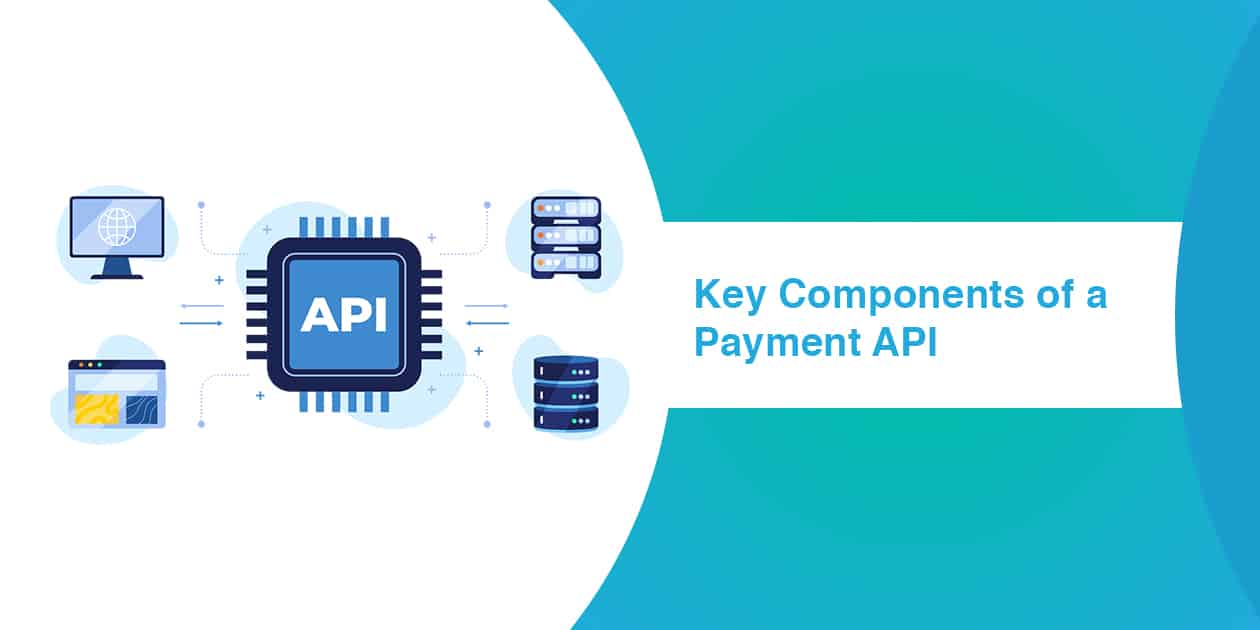
Core Building Blocks:
Versioned endpoint URLs let you create a charge, issue a refund, check status, or manage a subscription. Most modern APIs use REST with JSON payloads. Tokenization replaces card numbers with tokens that have no value if intercepted. A sandbox lets you test flows before you handle real money. Providers also sign webhooks, so you can confirm an event is genuine before you act on it.
Authentication:
Providers verify every request with public and secret keys, often with an HMAC (hash-based message authentication code) signature computed over the request body. Many also use OAuth 2.0 access tokens with scopes, so a system receives only the permissions it needs.
Idempotency Keys:
Networks fail, and clients retry. Without protection, a retry can charge a customer twice. An idempotency key is a unique value, often a UUID, that the client sends with a request. If the same key arrives again, the API returns the original result instead of creating a second payment. Send one with every call that moves money.
Error and Decline Codes:
HTTP status codes describe the request: 400-level codes point to a problem with the call, and 500-level codes point to a problem on the provider’s side. Decline codes describe the bank’s decision. ISO 8583 response codes include familiar values such as 05 (do not honor) and 51 (insufficient funds), and most providers map them to readable codes. Retry timeouts, but never retry hard declines.
Rate Limits and API Versioning:
Providers cap how many requests a client can send. When you exceed the cap, the API returns an HTTP 429 (Too Many Requests) response, so retry with exponential backoff and jitter. Providers also version their APIs, usually in the URL path (such as /v1/), so look for clear deprecation notices before a version retires.
Sample Payment Request and Response:
The example below is illustrative and does not describe any one provider’s API. Amounts use the currency’s smallest unit, so 12500 means $125.00.
POST /v1/payments
Authorization: Bearer <access_token>
Idempotency-Key: 7c9e6679-7425-40de-944b-e07fc1f90ae7
Content-Type: application/json
{
“amount”: 12500,
“currency”: “USD”,
“source”: “tok_8f3a91c2”,
“capture”: true,
“reference”: “order-10482”
}
A successful response returns the status and identifiers:
{
“id”: “pay_3Kd92xQ”,
“status”: “captured”,
“amount”: 12500,
“currency”: “USD”,
“authorization_code”: “A1B2C3”,
“reference”: “order-10482”,
“created_at”: “2026-10-15T14:32:08Z”
}
If the network drops the first response, you send the same request with the same Idempotency-Key, and the API returns the original result without a second charge.
If you would rather not build and maintain these pieces yourself, our remittance software platform gives you one integration layer to banks, payment networks, and compliance databases, and our team can scope your integration with you.
Types of Payment APIs
Providers usually package their capabilities as separate API families:
| Type | Primary function |
| Transaction APIs | Initiate, capture, refund, or cancel payments |
| Subscription APIs | Manage recurring billing and renewals |
| Payout APIs | Send funds to bank accounts, cards, or wallets |
| 3D Secure (3DS) APIs | Verify cardholder identity to meet Strong Customer Authentication rules |
| Dispute APIs | Retrieve chargebacks and submit evidence |
| Data and reporting APIs | Provide transaction data and analytics |
Online Payment API vs. Business Payments API
Online Payment API:
An online payment API collects money from customers at checkout: cards, wallets, and bank-based methods for e-commerce, SaaS, and marketplaces.
Business Payments API:
A business payments API covers broader money movement: paying suppliers, settling with agents, disbursing remittances, and reconciling accounts. B2B and cross-border flows often add identity verification, sanctions screening, and corridor-specific routing. Bank-to-bank messages on these routes increasingly use ISO 20022, the global XML messaging standard. Swift ended the coexistence of its older MT messages with ISO 20022 for cross-border payments on 22 November 2025.
Which One Fits a Remittance Business?
For remittance companies, money transfer operators, and fintechs, the second category matters most, and a remittance API or money transfer API belongs squarely in it. A transfer is not complete when a card is charged. It is complete when the system has verified, screened, routed, paid out, and recorded the funds for audit.
How Do You Carry Out a Payment Gateway API Integration?
The Five Integration Stages:
A payment gateway API integration usually follows five stages:
- Get credentials. Create an account and receive separate sandbox and production keys.
- Configure the sandbox. Use test card numbers and simulated declines to validate every scenario.
- Build the server-side integration. Implement charge, refund, and webhook-handler endpoints, ideally with the provider’s SDK, and add idempotency keys and retry logic.
- Connect the front end. Embed a hosted page, prebuilt component, or custom form. Hosted options keep card data off your servers and reduce your PCI DSS scope.
- Go live. Activate production credentials, finish user acceptance testing, and watch webhook delivery and approval rates closely.
Remit Anywhere Implementation Timeline:
A basic card flow with webhooks can take a few days, and full builds with alternative payment methods, recurring billing, and routing logic can take weeks or longer. At Remit Anywhere, we run implementations for our remittance software platform through four stages: planning, integration, testing, and deployment. Most finish within two to six weeks. We need three main inputs from you: API access, compliance documents, and a technical contact.
How Does Remit Anywhere Approach API Integration for Payment Processing?
An API-First Integration Layer:
We built our platform on API-first payment infrastructure, and we integrate legacy systems instead of replacing them. Our integration layer manages the connections to banks, third-party processors, and payment networks, so your team does not have to build each link. It supports:
- API integrations with banks, processors, and compliance databases
- Banking integrations that speed up settlement
- Payment gateway integration for more payment methods
- Encrypted, authenticated APIs
- Role-based access control
API Access by Plan:
We scale API access by plan. Starter includes standard API access, Growth adds advanced API access, and Enterprise adds custom integrations with banks and payment networks, an SLA-backed uptime guarantee, and a dedicated implementation team. If you have questions about data protection and ownership, you can talk to our team.
Security and Compliance: What to Check?
Security is the first thing to evaluate in any API integration payment processing project. A poorly protected payment API exposes both your customers and your business.
PCI DSS:
PCI DSS is the baseline for any business that stores, processes, or transmits card data. PCI DSS v4.0.1 is now the only active version, and the future-dated requirements from v4.0 became mandatory on March 31, 2025. You can find the current documents in the PCI Security Standards Council document library. The self-assessment questionnaire (SAQ) you file shows how much work you face:
| SAQ A | SAQ D | |
| Who files it | Merchants that fully outsource card data handling to a validated provider, through a redirect or hosted iframe | Merchants that handle card data on their own systems, or that fit no other SAQ |
| Typical integration | Hosted payment page or provider-hosted iframe | Direct API integration that sees raw card numbers |
Since 2025, a merchant that embeds an iframe must also confirm its own pages are not open to script attacks. Most businesses therefore choose hosted pages and tokenized flows.
API-Level Threats:
Broken authorization, weak authentication, and excessive data exposure rank among the most serious API risks. The OWASP API Security Project maintains a Top 10 list (the 2023 edition is current) that engineers can review during design and testing.
KYC and AML for Money Transfers:
Remittance and cross-border use cases need identity verification and transaction monitoring on top of card security. The FATF Recommendations form the basis of most AML rules. On our platform, we run automated KYC checks and real-time AML screening before funds move, and we generate required regulatory reports automatically. In regions where PSD2 applies, your checkout must also support 3D Secure.
How to Choose a Payment API?
Questions to Ask Any Provider:
Before you select a provider, get answers to these questions:
- Documentation and support: Are the docs clear and current, with SDKs in your languages?
- Reliability: What uptime does the provider publish? Industry averages sit near 99.46%, so check published service levels.
- Resilience features: Does the API support idempotency keys, signed webhooks, documented rate limits, and a clear versioning policy?
- Security and compliance: Does the provider describe PCI DSS, 3DS, tokenization, and key-management practices?
- Coverage: Does it support your currencies, countries, payment methods, and payout rails?
- Disputes and reporting: Can you access transaction data, decline codes, chargebacks, and settlement reports through the API?
- Pricing clarity: Are transaction fees, setup costs, and integration charges transparent?
The most common pitfalls are limited reporting, missing regional coverage, a narrow set of payment methods, no protection against duplicate charges, and unexpected costs.
Payment API Trends to Watch in 2026
Unified and Orchestration APIs:
Instead of maintaining separate integrations for each provider, businesses increasingly connect through a single layer that manages routing, retries, and reporting across providers.
Account-to-Account (A2A) Payments:
Bank-based payments are gaining attention as an alternative to cards, particularly for cross-border and B2B use. Many of these schemes carry ISO 20022 data, which makes reconciliation easier.
Evolving Regulation:
In the EU, lawmakers agreed final compromise texts of PSD3 and the Payment Services Regulation (PSR) in April 2026. Formal adoption was still pending at the time of writing, with most obligations expected to apply around 2028. Fraud monitoring, strong customer authentication, and liability rules are among the areas affected.
Frequently Asked Questions
1. What is a payment API in simple terms?
A payment API is a secure bridge between a business’s software and the systems that move money. It lets you request, authorize, refund, and track payments without building banking connections yourself.
2. What is the difference between a payment API and a payment gateway?
The payment gateway is the service that authorizes and routes a transaction. The payment API is the interface a website or app uses to communicate with it.
3. What is a payment processing API?
A payment processing API is the part of a payment API that moves a transaction from request to result. It sends the payment details to a processor, passes the request to the card network and issuing bank, and returns an approval or decline with a code.
4. What is an idempotency key?
An idempotency key is a unique value a client sends with a payment request. If a network error forces a retry, the API recognizes the key and returns the original result, so the customer is not charged twice.
5. How long does payment gateway API integration take?
A simple card-only flow can take days, while integrations with multiple payment methods, recurring billing, and compliance workflows can take several weeks. At Remit Anywhere, we typically complete remittance platform implementations within two to six weeks.
6. What is a remittance API?
A remittance API, also called a money transfer API, lets a platform create transfers, verify senders, screen them against sanctions lists, route funds across corridors, pay out to bank accounts or wallets, and track status. It covers the full transfer, not only the card charge.
7. How are payment APIs priced?
Providers usually charge a per-transaction fee, often a percentage plus a fixed amount, or a subscription tier, or both. Some add setup or payout fees, and large programs often get custom pricing. Ask for a full fee schedule before you compare providers.
Ready to Connect Your Payments?
Choosing the right payment API affects speed, compliance, and growth. If you need a secure, API-first platform for money transfers, cross-border payments, or remittance operations, our team can walk you through a demo and pricing. You can also explore our remittance software platform or start with a free account.