
AML compliance in banking is the combination of policies, internal controls, and technology that is used by financial institutions to detect, prevent, and report money laundering. Billions of transactions are moved through banks, payment providers, and money services businesses (MSBs) every day, and when controls are weak, a path for illegal funds is opened. In this guide, money laundering is defined, the building blocks of an AML program are outlined, the checks that are performed are explained, and the role of modern software is described.
What Is Anti-Money Laundering (AML) Compliance in Banking?
Anti-money laundering compliance means that policies, procedures, and technologies are implemented so that illicit funds cannot be passed through legitimate financial systems, as LSEG explains in its AML glossary. The goal is to identify and prevent financial crimes such as fraud, corruption, and terrorism financing.
In the United States, the framework is established by the Bank Secrecy Act (BSA). Program, recordkeeping, and reporting requirements are established by the BSA and its regulations, and the FDIC’s AML/CFT resource page shows that an AML/CFT monitoring program is required of supervised banks. The BSA is administered by the Financial Crimes Enforcement Network (FinCEN), and globally, standards are set by the Financial Action Task Force (FATF).
AML compliance is not treated as a one-size-fits-all exercise. A program must be risk-based, which means that customers, products, delivery channels, and operating jurisdictions are considered when the program is designed, as LexisNexis points out.
What Is the Definition of Money Laundering?
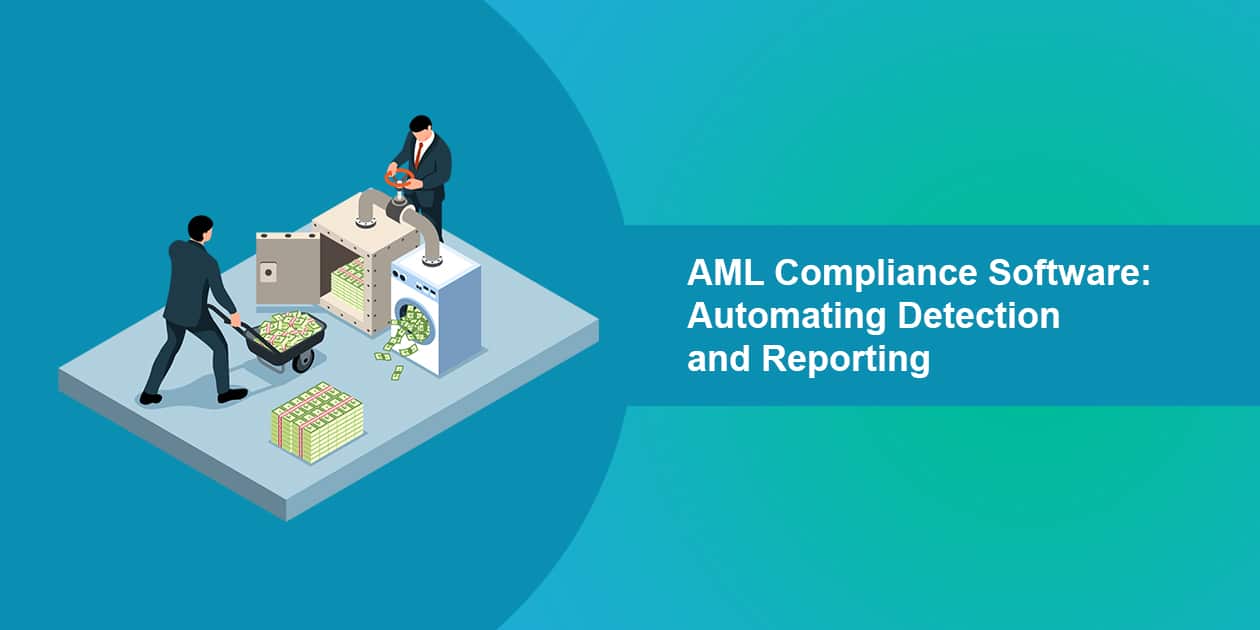
Money laundering is the process by which money obtained through crime is made to look legitimate. Proceeds from offenses such as fraud, drug trafficking, corruption, and tax evasion are typically involved.
The scale of the problem is difficult to measure because of its secret nature. However, it is estimated by the United Nations Office on Drugs and Crime (UNODC) that 2–5% of global GDP, or roughly $800 billion to $2 trillion in current US dollars, is laundered worldwide each year. Because the true total cannot be confirmed, this figure should be read as an estimate range.
The process is commonly described in three stages:
| Stage | What happens | Simple example |
| Placement | Illicit cash is introduced into the financial system | Large cash deposits are split into smaller amounts |
| Layering | The money trail is hidden through many transfers | Funds are moved between accounts, countries, and currencies |
| Integration | The “cleaned” funds are returned to the economy | Money is used to buy property or fund a business |
Because these stages often cross borders, remittance and money transfer channels are closely watched by regulators.
Anti-Money Laundering Compliance: The Five Pillars
An effective anti-money laundering compliance program is usually organized around five pillars, as outlined by LSEG and reflected in the requirements of FINRA Rule 3310 for broker-dealers.
| Pillar | Purpose |
| Internal controls | Written policies and procedures are established, and transactions are monitored and investigated |
| Independent testing | The program is audited regularly so that gaps are found and corrected |
| Designated compliance officer | Accountability is assigned to a qualified person |
| Employee training | Staff are kept informed of risks, laws, and reporting channels |
| Customer due diligence (CDD) | Customer risk is assessed, and beneficial owners of legal entities are identified |
Under FINRA’s rule, it is also required that the written program is approved by a senior manager and that ongoing monitoring is carried out to identify and report suspicious transactions. Although that rule applies to securities firms, the same principles are applied across banks and MSBs.
Core Anti-Laundering Checks Performed by Banks
Several anti-laundering checks are performed at onboarding and throughout the customer relationship:
| Check | What is done | When |
| Customer Identification Program (CIP) | Identifying information is collected and verified | Before an account is opened |
| Know Your Customer (KYC) and CDD | A customer risk profile is built from the nature and purpose of the relationship | At onboarding and on an ongoing basis |
| Beneficial ownership checks | The individuals who own or control a business customer are identified | For legal entity customers |
| Sanctions and PEP screening | Customers are screened against sanctions lists and politically exposed person lists | At onboarding and continuously |
| Enhanced due diligence (EDD) | Deeper scrutiny is applied to higher-risk customers | When risk is elevated |
| Transaction monitoring | Unusual patterns, such as sudden large deposits, are flagged | Continuously |
| Suspicious Activity Reports (SARs) | Suspicious activity is reported to FinCEN | When suspicion arises |
It should be noted that, according to a joint statement referenced by the FDIC, no unique additional due diligence steps are required for customers solely because they may be politically exposed persons. Instead, risk-based procedures are applied.
When a suspicious transaction is detected, the process generally follows this path:
- An alert is generated by the monitoring system.
- The alert is reviewed by an analyst, and supporting information is gathered.
- The case is escalated to the compliance officer if suspicion remains.
- A SAR is filed electronically through FinCEN’s filing system.
- Records are retained so that the decision can be audited. Retention periods of five years or more are commonly required.
Identity verification, which sits at the heart of these checks, is covered in more detail in our guide to KYC compliance for MSBs.
AML Compliance Software: Automating Detection and Reporting
Manual reviews cannot keep pace with today’s transaction volumes. For this reason, AML compliance software is relied upon by financial institutions to automate repetitive work. Typical capabilities include:
- Customer and entity screening against sanctions and PEP lists
- Real-time transaction monitoring with configurable risk rules
- Alert management and case workflows
- SAR preparation and record-keeping
- Audit trails for examiners
The operational challenges are well documented. Alert volumes can overwhelm investigators, and cross-border operations are complicated by differing national rules, as LSEG notes. Because software models are themselves a source of risk, an interagency statement on model risk management is provided for systems that support BSA/AML compliance, so the tools should be validated and governed like any other critical control.
AML Technology Trends Shaping Banking
Several developments in AML technology are being adopted by banks and payment firms:
- Artificial intelligence: Risky transactions are flagged faster, and false positives are reduced.
- API-based monitoring: Screening and monitoring are embedded directly into payment flows.
- Real-time screening: Customers and counterparties are checked before funds are released.
- Resource sharing: Collaborative arrangements between banks are described in an FDIC-referenced interagency statement on sharing BSA resources.
- Regulatory support for innovation: New approaches to meeting AML obligations are encouraged in a joint statement on innovative efforts to combat money laundering.
Why AML Compliance Matters for Money Services Businesses
Banks are not the only institutions that are held to these standards. Money services businesses that move funds across borders are expected to maintain AML programs, and their licences are often dependent on them. Failure can lead to heavy fines, license revocation, and even criminal exposure, as described by LSEG. A well-run program also protects reputation and helps make communities safer, as stressed by LexisNexis.
How Remit Anywhere Supports AML Compliance
At Remit Anywhere, compliance is treated as a foundation, not an afterthought. Our remittance software is built for banks, fintech firms, MSBs, and payment providers that cannot afford gaps in compliance, security, or speed. KYC, AML, and regulatory reporting tools are pre-built into our platform, and AML transaction monitoring and automated KYC verification are run by our compliance engine on every transaction.
For businesses that are comparing platforms, the factors to consider are laid out in our overview of how remittance software improves your business and our best remittance software options. More compliance guides are regularly published on our blog.
AML Compliance Checklist
- A qualified AML compliance officer is designated.
- A written, risk-based program is approved by senior management.
- CIP and CDD are completed for every customer, including beneficial owners.
- Sanctions and PEP screening are performed at onboarding and on an ongoing basis.
- Transactions are monitored, and suspicious activity is escalated and reported.
- Staff are trained at least annually.
- The program is tested independently, and records are retained.
Frequently Asked Questions
1. What is AML compliance in banking?
AML compliance in banking is the set of policies, controls, and technologies by which money laundering and related crimes are detected, prevented, and reported.
2. What is the definition of money laundering?
Money laundering is the process by which illegally obtained funds are disguised so that they appear to come from a legitimate source. Placement, layering, and integration are the three stages usually described.
3. What are the main requirements of AML compliance?
A risk-based written program, a designated compliance officer, employee training, independent testing, and customer due diligence are generally required.
4. What are anti-laundering checks?
Identity verification, KYC and CDD, sanctions and PEP screening, enhanced due diligence, and transaction monitoring are included among anti-laundering checks.
5. Who is responsible for AML compliance in a bank?
Overall accountability is carried by senior management, while day-to-day oversight is typically assigned to a designated AML compliance officer.
6. What is AML compliance software?
AML compliance software is used to automate customer screening, transaction monitoring, alert handling, and reporting so that suspicious activity can be identified faster and more consistently.
7.How often should AML training be conducted?
Training is recommended at least annually, and it should be updated whenever regulations or risks change, as advised by LSEG.
8.What happens if a bank fails to comply with AML rules?
Fines, restrictions on operations, loss of licenses, and potential criminal liability for responsible individuals can result, along with serious reputational damage.
9.Do money services businesses need an AML program?
Yes. MSBs are generally required to maintain AML programs, including KYC procedures and suspicious activity reporting, in order to retain their licenses.
Ready to see how automated AML and KYC checks can be built into your remittance operation? A walkthrough can be requested through our remittance software page.