
Every day, millions of people send money across borders. Workers send wages home. Families support each other across continents. Businesses pay overseas suppliers. Behind every one of those transfers sits a money transfer business making it happen.
But how does it work? What happens between hitting send and the money arriving? Ever wondered how to start a money transfer business (informational intent version). End to end money transfer lifecycle.
This guide covers that too.
This guide covers money transfer business fundamentals from the ground up. Ever asked what the process of sending money internationally is? You will find the full answer here. No jargon. No fluff. Just a clear look at how money transfer business works. How the systems operate. What it takes to run one well.
What Is a Money Transfer Business?
A money transfer business is a licensed company that moves funds between people or businesses. Usually across different countries. Often across different currencies. It sits between the sender and the recipient and handles everything in the middle.
Definition and Core Function:
The core function is simple. Take money in one place. Deliver it somewhere else. Do it fast, securely, and within the law.
These businesses operate inside the broader remittance ecosystem. That ecosystem includes banks, payment processors, regulators, and technology platforms. Together they make cross-border payments possible.
Understanding remittance ecosystem architecture explains a lot. It shows why sending money internationally involves so many moving parts. It is not one system. It is dozens of systems working together.
Role in Global Financial Systems:
The money transfer business plays a much bigger role in global finance than most people realize. The World Bank puts remittances to low and middle-income countries at hundreds of billions of dollars a year.
For many families, that money is their main source of income. Beyond personal transfers, these businesses also support small merchants, international trade, and diaspora communities worldwide. They are the backbone of cross-border finance.
Types of Money Transfer Businesses:
Not all money transfer businesses work the same way. Here are the main types.
Banks. Traditional banks offer wire transfers and international payments. Reliable but often slow and expensive.
Money Transfer Operators (MTOs). Companies built specifically around moving money internationally. They have large agent networks and established transfer corridors.
Digital remittance platforms. Online-only operators that tend to offer better rates and faster delivery than traditional MTOs.
Mobile wallet services. Common in markets like Kenya, the Philippines, and India. Recipients get funds directly on their phones without needing a bank account.
Peer-to-peer transfer systems. Platforms that match senders and receivers in different currencies. This cuts out intermediary banks and lowers costs.
Types of Money Transfer Models
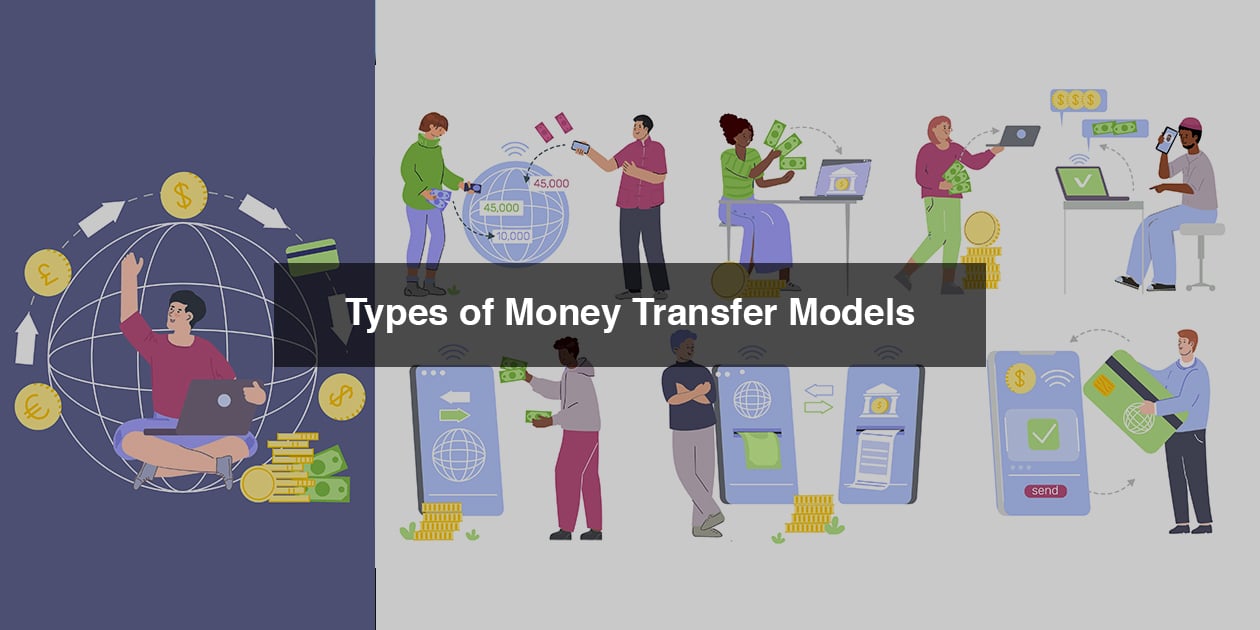
To understand the remittance business model, look at how different operators solve the same problem. Business models and monetization strategies vary widely across the industry.
Bank-Based Transfers:
Banks use the SWIFT network for international payments. The process works but is slow. It can take two to five days and often passes through multiple intermediary banks. Each one takes a small cut. Fees are high.
Money Transfer Operators (MTOs):
A money transfer operator explained simply is this. A licensed company that moves money between countries. It uses its own network. It does not rely solely on banks.
MTOs build relationships with local payout partners in each destination country. They pre-fund accounts there to speed up delivery. The money transfer operator explained this way shows why they are often faster than traditional banks.
Digital Remittance Platforms:
Digital platforms connect directly to local payment systems in destination countries. This cuts out layers of intermediary banks. The digital money transfer system they run is leaner, faster, and usually cheaper for customers.
Mobile Wallet Transfers:
The sender pays through a traditional channel. The recipient gets funds on their phone. No bank account needed. This model works well in markets with high smartphone use but low banking access.
Peer-to-Peer Transfer Systems:
These platforms match people sending money in opposite directions. Picture this. Someone in the UK wants to send euros to Spain. Someone in Spain wants to send pounds to the UK. The platform settles both transfers locally. No money crosses the border at all. Costs drop significantly.
How a Money Transfer Business Works (Step-by-Step Lifecycle)
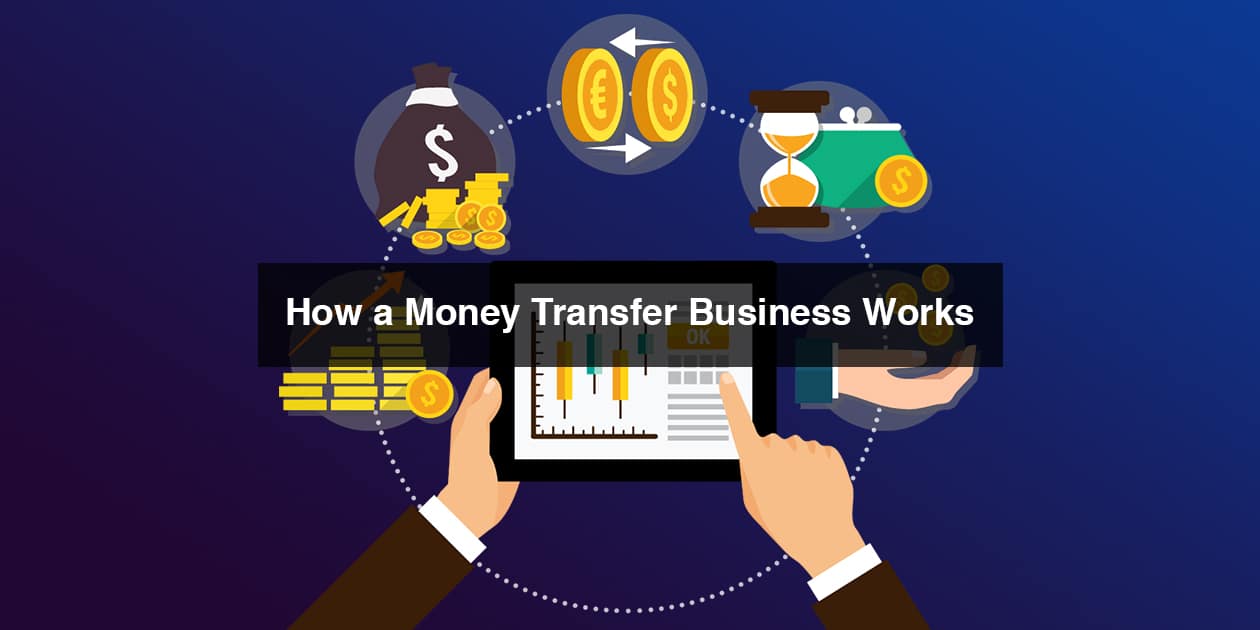
This is the part most people never see. Here is how a money transfer business works step by step. From the moment the sender opens the app to the moment the recipient gets paid.
This step-by-step transfer process covers every stage of the end-to-end transaction lifecycle.
Step 1: Sender Initiation
The sender opens an app, visits a website, or walks into an agent location. They enter the recipient’s details, the amount, and the destination. The system shows the rate and fee upfront. The sender sees exactly what the recipient will get before they confirm.
This is the front door of the international money transfer process. Simple on the surface. Very complex underneath.
Step 2: Identity Verification (KYC)
Before any money moves, the sender’s identity must be verified. This is identity verification system. It is a legal requirement everywhere money transfer businesses operate.
New customers upload a government ID. Sometimes a selfie too. Returning customers are already verified. KYC is not just a box to check. It is the first line of defence against fraud and money laundering.
Step 3: Payment Collection
The sender pays. Options include debit card, credit card, bank transfer, or cash at an agent location.
Bank transfers are cheapest but can take a day to clear. Card payments are instant but carry higher processing fees. Cash is immediate but requires a physical agent network. Each method affects both cost and speed.
Step 4: Currency Conversion
Say the sender pays in dollars and the recipient collects in pesos. The platform converts the currency. This is where currency conversion mechanisms come into play.
Currency exchange is one of the main ways money transfer businesses make money. The rate offered to customers is always slightly worse than the mid-market rate. That gap is the FX margin. The operator keeps it. Currency conversion engine explain why the same transfer costs different amounts with different providers.
Step 5: Transfer Routing (Payment Rails)
Once collected and converted, the payment needs to travel to the destination. This is where payment rails matter.
Payment rails are the networks that move money between financial institutions. SWIFT handles most international transfers. ACH and SEPA handle regional payments. Local real-time systems handle transfers within individual countries.
The money transfer system architecture picks the right rail. This is one of the key decisions in running a cross-border money transfer system. Payment infrastructure layers drive speed, cost, and reliability.
Step 6: Settlement Process
Settlement is when money changes hands between institutions. This is separate from the transfer instruction.
The instruction is nearly instant. The actual funds take longer. Settlement systems and clearing systems vary by country. Some settle in real time. Some once a day. Some take two or three business days.
Liquidity management matters here. The operator needs funds ready in the destination country before settlement. Pre-funded accounts with local banking partners handle this.
Step 7: Recipient Payout
The final step is delivery. The recipient gets their money. Options include bank deposit, mobile wallet, cash pickup, or home delivery.
The end to end money transfer lifecycle is complete when the recipient confirms receipt
Money Transfer System Architecture Explained
Understanding money transfer system architecture explained properly means looking at each payment infrastructure layer separately.
Frontend Interfaces (apps/web):
This is what the customer sees. A mobile app, a website, or an agent counter. It collects the sender’s input, shows rates and fees, and provides tracking updates.
Backend Processing Systems:
The backend is where the real work happens. Transaction tracking engines validate transfers, apply compliance checks, calculate fees, and start the payment. These systems run around the clock and handle thousands of transactions at once.
Payment Gateways and APIs:
Payment gateways connect the platform to card networks and bank systems. APIs connect to partner institutions, FX providers, and compliance tools. This is what makes how money transfer systems operate in a modular and scalable way possible.
Banking Partnerships:
Every money transfer business needs banking partners. These are the institutions that hold the operator’s funds and process outgoing payments. Finding and keeping banking partners is hard. It is one of the biggest challenges in this industry. Many banks avoid MTOs. Compliance concerns put them off.
Settlement Networks:
The settlement mechanism finalizes transactions between institutions. They run in the background. Invisible to customers. Critical to the system.
Cross-Border Money Transfer Process Breakdown
Here is how cross-border payments are processed. What is the process of sending money internationally? Understanding cross-border transaction flow helps explain why international transfers are more complex than domestic ones.
Transfer Corridors:
A transfer corridor is a route between two countries. The US to Mexico. The UK to India. Each one has its own characteristics. Volume, competition, rules, and fees all vary.
High-volume corridors are cheaper. Low-volume ones cost more. Heavily regulated ones cost even more. This is core to cross-border transaction flow. It drives pricing.
Intermediary Institutions:
Most international transfers go through at least one intermediary bank. These are correspondent banks. They charge for their role. This is one reason international payments can feel expensive. Digital platforms cut out intermediary banks. They connect directly to local systems in the destination country.
FX Conversion Handling:
Every cross-border transfer involves currency exchange at some point. When it happens matters. The rate matters too. Some operators convert at the point of sending. Others wait until delivery. Timing affects the customer rate. It also affects the FX risk the operator carries.
Settlement Timing Differences:
Different countries have different settlement windows. A transfer from the US to the UK might settle within hours. The same amount going to a smaller market might take two or three days. These differences in settlement and clearing systems explain a lot. They are why remittance fees vary between destinations.
Business Model of a Money Transfer Company
How do money transfer companies make money? Understanding business models and monetization in this industry means looking at two things. Two main revenue streams, and the cost structures behind them.
Revenue Streams (Fees, FX margins):
Transaction fees. A flat or percentage charge on every transfer. This is what the customer sees upfront.
FX margins. The gap between the mid-market exchange rate and the rate offered to the customer. This is often the bigger revenue source. Many customers do not notice it.
Some providers charge high fees but offer good rates. Others advertise zero fees but earn entirely on exchange rates. Always look at the total cost. Not just the headline fee.
Cost Structure:
Cost structures and margins in this business are significant. Key costs include banking fees, processing, compliance, agent commissions, technology, and customer acquisition.
Liquidity management has a cost too. Pre-funding accounts ties up capital. Getting cost structures and margins right is critical. It separates profitable operators from those that struggle.
Liquidity Management:
Liquidity management means the right funds in the right place at the right time. Run low on liquidity and transfers stop. Simple as that. Get it right and everything runs smoothly.
Large operators manage liquidity across dozens of currencies. All at the same time. It is one of the hardest things to get right in this business.
Scaling Challenges:
Growing a money transfer business means adding new corridors, currencies, and payment methods. Each one needs new banking relationships. New compliance monitoring tools approvals. New technical work. Scaling is expensive and slow. That is why the industry is still dominated by a small number of large operators.
Compliance and Regulatory Requirements
Regulatory and compliance systems are not optional. Financial compliance is the foundation. Everything builds on it. They are the foundation the whole business is built on.
AML (Anti-Money Laundering):
AML stands for anti-money laundering. Every money transfer business must detect and report suspicious activity. No exceptions. That means transaction monitoring, pattern detection, and reporting to regulators.
Integrated AML functionality is core to how money transfer systems operate legally. Failure to meet AML requirements is serious. Heavy fines or loss of licences follow.
KYC (Know Your Customer):
KYC verification confirms the identity of every customer before they transact. It is a legal requirement in every regulated market. Good KYC catches risk. It does not create so much friction that real customers give up.
Transaction Monitoring Systems:
Transaction monitoring systems spot unusual patterns in real time. A customer who normally sends small amounts suddenly sends a large one. Multiple transfers to the same recipient in a short time. These patterns trigger a review. This keeps money transfer systems safe.
Reporting Obligations:
Money transfer businesses must file reports with financial regulators. In the US that means Suspicious Activity Reports and Currency Transaction Reports. Similar rules apply in the UK, EU, Canada, and most other markets. Automated compliance systems cut this burden significantly.
Fraud Prevention and Risk Management
Fraud is a constant challenge. Risk management frameworks and fraud detection systems are what keep businesses and customers safe.
Common Fraud Types:
Account takeover. A fraudster accesses a legitimate customer’s account and initiates transfers.
Social engineering. The victim is tricked into sending money voluntarily. Often under the belief they are paying a bill or helping someone in need.
Synthetic identity fraud. Fake identities are used to open accounts and move money.
Money mule networks. Accounts move criminal funds in small amounts to avoid detection.
Detection Mechanism:
Modern fraud detection systems use machine learning. They spot unusual behaviour in real time. They build a normal behaviour profile for each customer. Anything outside that profile gets flagged for review.
Device fingerprinting and IP analysis are key tools. So is behavioural biometrics. All part of modern fraud detection systems. The goal is simple. Catch fraud before money leaves the platform.
Risk Scoring Systems:
Every transaction gets a risk score. High-risk transfers go to a compliance team for review. Medium-risk ones trigger extra verification. Low-risk ones clear automatically.
Risk management frameworks balance security and customer experience. Too strict and real customers get blocked. Too loose and fraud gets through. Getting the balance right is hard. It is a core operational challenge.
Transaction Limits:
Transaction limits cap how much can be sent in one go or within a set period. They are a basic but effective tool inside risk management frameworks. They also support regulatory compliance by keeping individual transactions below certain reporting thresholds.
Factors That Affect Transfer Speed and Cost
Why do remittance fees vary so much between providers? Here are the main factors. Transfer speed optimization is about understanding and managing each one.
Payment Methods:
How the sender pays affects both cost and speed. Card payments are fast but expensive. Bank transfers are cheaper but slower. Cash is immediate but needs agent infrastructure. Transfer speed optimization often starts with getting the payment method mix right.
Geographic Regions:
Transfers between well-connected markets, like the US and Europe, are fast and cheap. Transfers to countries with less developed banking infrastructure take longer and cost more.
Banking Infrastructure:
Countries with real-time payment systems are much faster. Those relying on batch settlement take longer. This is one of the biggest factors in transfer speed optimization.
Currency Volatility:
High currency volatility raises FX risk for the operator. That risk gets priced into the exchange rate margin. Volatile currency transfers tend to carry wider FX spreads. This explains part of why remittance fees vary between corridors.
Common Challenges in Running a Money Transfer Business
Running a money transfer business is genuinely hard. Here is what trips up even experienced operators.
Regulatory Complexity:
Every country has different rules. Licensing, reporting, AML/KYC frameworks, and consumer protection all vary. Keeping up with changes across markets is a full-time job. One compliance failure can cost your licence.
Currency Fluctuations:
Exchange rates move constantly. An operator locks in a rate for a customer. If the market moves before settlement, the operator absorbs the loss. Managing FX exposure is a daily challenge.
Operational Bottlenecks:
Manual processes create bottlenecks. Legacy technology does too. Poor system integration makes it worse. The best operators invest heavily in automation. And in reliability.
Competition from Fintech:
Digital-first remittance platforms have put serious pressure on traditional operators. They offer lower fees, better rates, and a cleaner experience. Competing with well-funded fintech is one of the biggest challenges in this industry. Understanding how money transfer business works at a technology level is now essential. Any operator that wants to stay competitive needs it.
How to Start a Money Transfer Business: Key Considerations
Many entrepreneurs ask how to start a money transfer business. Here is an honest overview of what it involves.
First, you need licensing. Requirements vary by country. In the US you need a Money Services Business registration and potentially state-level licences. In the UK you register with the FCA. In most markets, compliance approvals take months.
Second, you need banking partners. This is often the hardest part. Many banks are reluctant to work with new MTOs due to compliance risk. No banking partners means no payments. Simple as that.
Third, you need technology. A frontend, a backend processing system, payment gateway integrations, and a compliance layer. Building from scratch is expensive. Many operators use white-label remittance software. It is faster to launch.
Fourth, you need liquidity. Pre-funded accounts in destination countries. Enough capital to absorb FX swings and settlement delays.
Fifth, you need customers. Marketing, agent networks, or partnerships. Fifth, you need customers. Customer acquisition is competitive here. And expensive.
Starting a money transfer business comes down to three pillars. Compliance. Banking. Technology. Everything else follows.
End-to-End Money Transfer Lifecycle: Framework
Here is the full remittance system workflow from start to finish.
Initiation → Sender submits transfer details.
Verification → KYC checks and AML screening run.
Funding → Sender’s payment is collected and confirmed.
Processing → Transaction processing validates and routes the transfer.
Conversion → Currency exchange converts funds at the agreed rate.
Settlement → Funds move through settlement and clearing systems to the destination.
Delivery → Recipient receives funds via bank, wallet, or cash pickup.
This is the end to end money transfer lifecycle. It is also called the end-to-end transaction lifecycle. It covers what happens during a money transfer transaction. From the first click to the final payout.
Money Transfer System Stack: Framework
Every digital money transfer system is built on layered payment infrastructure layers.
User Interface Layer — The app, website, or agent counter.
Application Layer — Business logic, pricing engine, customer management.
Payment Processing Layer — Transaction processing, routing, and fee calculation.
Banking & Settlement Layer — Connections to payment rails and settlement networks.
Compliance Layer — AML screening, KYC verification, transaction monitoring, and reporting.
These payment infrastructure layers show how money transfer systems operate at scale. They also show where problems emerge.
FAQs
What is a money transfer business?
A money transfer business is a licensed company. It moves funds between people or businesses. Usually across borders. It handles the full process. From payment collection to recipient delivery. All within regulatory and compliance systems.
How does a money transfer business work step by step?
The step-by-step transfer process starts with sender initiation. It moves through KYC verification, payment collection, and currency conversion. Then comes routing via payment rails, settlement, and recipient payout. This end-to-end transaction lifecycle can take a few minutes. Or a few business days. It depends on the destination and payment method.
Why do money transfer fees vary between providers?
Remittance fees vary for several reasons. Payment rails, transfer corridors, banking infrastructure, and currency volatility all play a role. So do each operator’s cost structures & margins. The destination country plays a big role. Less developed markets cost more to serve.
How are international money transfers processed?
Understanding how international payments are processed means following the cross-border transaction flow. The operator collects funds. Runs compliance checks. Converts currency. Routes through payment rails. A local payout partner handles delivery. Most transfers pass through at least one intermediary institution.
What happens during a money transfer transaction?
What happens during a money transfer transaction covers seven stages. Initiation, KYC verification, payment collection, currency conversion, routing, settlement, and delivery. Each stage involves different systems working together inside the money transfer system architecture.
How do money transfer companies make money?
Understanding how money transfer companies make money means looking at two revenue streams. Transaction fees charged on each transfer, and FX margins earned on currency conversion. Business models & monetization strategies vary but most operators use both.
What is the role of currency exchange in remittance?
Currency exchange is central to how remittance companies operate globally. Currency conversion mechanisms determine the cost of every cross-border transfer. The FX margin is often the largest cost in a remittance transaction. It is the gap between the mid-market rate and the rate offered to the customer.
Why is KYC required in money transfer systems?
KYC verification is required by law. It confirms customer identity. It stops the system being used for money laundering or fraud. It is a core part of regulatory and compliance systems that every licensed operator must maintain.
What are payment rails in money transfer?
Payment rails are networks. They move money between banks and institutions. SWIFT, ACH, SEPA, and local real-time systems are all types of payment rails. The choice of rail matters. It is a key part of the payment infrastructure layers. It determines how fast and how cheaply a transfer is completed.
When does a transfer get delayed?
Transfers get delayed for several reasons. Settlement and clearing systems in the destination country may be slow. Compliance checks may flag a transaction for review. Recipient bank details may be wrong. Liquidity issues can also cause delays. Transfer speed optimization is about minimising each of these risks.
What happens if a transfer fails?
If a transfer fails, funds go back to the sender. Usually after a short holding period. The operator should explain the reason. Common causes include incorrect recipient details, compliance issues, or destination bank problems.
How is fraud prevented in money transfer systems?
Fraud detection systems use several tools. KYC verification. Real-time transaction monitoring. Machine learning risk scoring. Device fingerprinting. Risk management frameworks combine all of these. They catch suspicious activity before money leaves the platform.