
This guide goes beyond definitions. Here, you will get a complete breakdown of remittance software, its architecture, step-by-step workflows, core features, compliance systems, and real challenges operators face.
What Is Remittance Software?
Remittance software is a specialized digital platform that enables individuals and businesses to send money across borders electronically. It manages the entire transaction lifecycle — from user initiation and identity verification to payment processing, currency conversion, transfer routing, settlement, and final payout to the recipient.
In simpler terms: remittance software is the engine that powers money transfer services. It is what transforms a user’s instruction (“send $200 to my family”) into an actual fund movement across banking networks, payment rails, and currency systems.
Core Purpose:
The core purpose of remittance software is to move value across geographic and financial boundaries — reliably, securely, and efficiently. It handles:
- Multi-jurisdictional compliance (different rules in each country)
- Real-time or near-real-time payment processing
- Currency conversion with live exchange rates
- Identity verification and fraud detection
- Settlement across disparate banking systems
- Transparent transaction tracking for senders and recipients
Role in Financial Systems:
Remittance software sits at the intersection of consumer finance, banking infrastructure, and international regulation. It connects individual users, banks in multiple countries, payment gateways, FX engines, and AML/KYC regulatory frameworks. Global remittances to low- and middle-income countries have exceeded $650 billion in recent years — the software infrastructure enabling those flows must be robust, compliant, and scalable.
Types of Remittance Software Systems
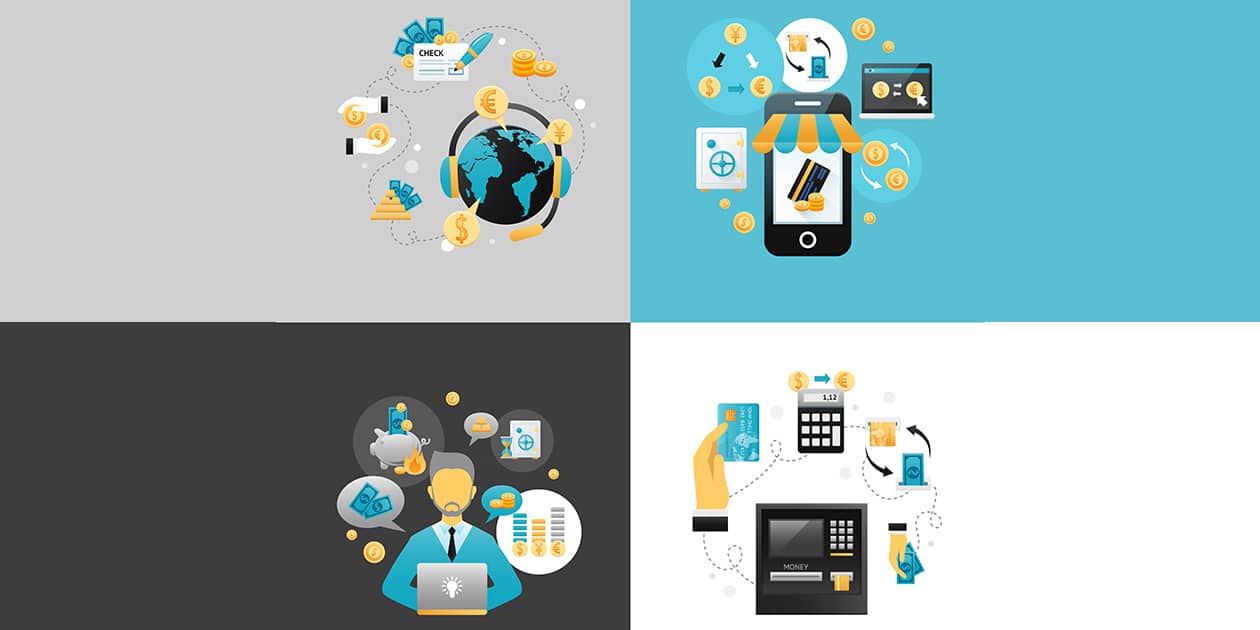
Bank-Based Remittance Systems:
Traditional banks operate remittance platforms on legacy SWIFT messaging networks and correspondent banking relationships. These systems prioritize regulatory compliance but often sacrifice speed and cost-efficiency — settlement times of 1–5 business days and fees of 5–10% are common.
Fintech Platforms:
Modern fintech remittance platforms use API-first architecture, pre-funded liquidity pools, and automated compliance engines to achieve settlement in seconds to hours at fees of 0.5–3%. They have disrupted the traditional market by cutting out correspondent banking layers and building direct local partnerships in receiving countries.
Mobile Remittance Systems:
Purpose-built for smartphone-first markets, mobile remittance systems integrate with mobile wallets, USSD interfaces, and agent networks. They serve the underbanked population and often operate as the primary financial infrastructure in emerging markets.
How Money Transfer Software Works (Step-by-Step):
Understanding how remittance software works requires following a transaction processing through its complete lifecycle — the remittance system workflow from initiation to delivery.
- Transaction Lifestyle – Remittance System Workflow
- Initiation – Sender enters transfer details; FX rate is quoted; transaction record created.
- KYC Verification – Identity document capture, biometric check, sanctions & PEP screening.
- Payment Processing – Funds collected from sender via payment infrastructure (card, bank transfer, wallet.
- Currency conversion – FX engine fetches live rates, applies margin, locks rate for transaction window.
- Transfer Routing – Core engine selects optimal payment rail (SWIFT, local ACH, UPI, Raast, M-Pesa).
- Settlement – Funds moved among institutions (prefunded, on-demand, or batch)
- Payout – Delivery to recipient via bank deposit, mobile wallet, cash pickup, or home delivery.
Step 1: User Initiation
The transaction begins when a sender logs into the remittance platform — web, mobile app, or agent terminal — and enters recipient info, send amount, receive currency, and transfer method. The FX engine immediately queries live rates and calculates the recipient’s expected payout. A quoted transaction record is created, valid for a defined window (typically 30–90 seconds) before the rate expires.
Step 2: KYC Verification
Before any funds move, the system runs KYC (Know Your Customer) verification — automated OCR, document authentication, biometric selfie-to-ID matching, and real-time screening against OFAC, EU, and UN sanctions lists, plus PEP screening. For returning users, the system performs a lighter-touch check. KYC verification is non-negotiable — without it, the platform violates AML regulations across virtually every jurisdiction.
Step 3: Payment Processing
Once KYC clears, the system initiates collection from the sender via payment gateways — card processors (Stripe, Adyen), bank transfer networks (ACH, SEPA, Faster Payments), or digital wallets. The payment gateway communicates authorization status in real time. A successful authorization triggers the next stage; failure triggers error handling and user notification.
Step 4: Currency Conversion
The FX engine fetches live rates from liquidity providers, applies the operator’s margin, and locks the rate for the transaction. For high-volume corridors (e.g. USD to MXN, GBP to INR), platforms hold pre-funded accounts in both currencies to enable instant conversion without relying on external FX markets for each transaction — eliminating settlement delay caused by FX market hours.
Step 5: Transfer Routing
The platform’s core routing engine selects the optimal payment rail based on receiving country and bank, transfer method, cost/speed optimization, and partner availability. Payment rails used in cross-border payment software include SWIFT, local ACH networks, real-time payment systems (UPI in India, Raast in Pakistan, PromptPay in Thailand), and mobile money APIs.
Step 6: Settlement
Settlement is the actual movement of funds between institutions. Remittance systems support prefunded settlement (instant payout from pre-held balances), on-demand settlement (via real-time payment networks), and batch settlement (periodic accumulation — common in bank-based systems). The settlement system reconciles net positions between the platform and payout partners daily or in real time.
Step 7: Payout
Final delivery via API call to the receiving bank, wallet provider, or agent network. Real-time status notifications keep both sender and recipient informed throughout. Transaction tracking ensures full visibility of funds from initiation to delivery.
Remittance Software Architecture Explained
- Frontend – Web app, native mobile (iOS/Android), agent terminal, USSD/chatbot interfaces.
- Backend – Transaction state machine, businesslogic, user management, event logging, queue management.
- Processing – Payment gateway, FX engine, routing engine, KYC processor.
- Banking – correspondent banks, local payout partners, prefunded currency accounts.
- Compliance – AML monitor, KYC verifier, sanctions screener, regulatory reporting engine.
APIs and Integrations
The API integration layer connects the remittance platform to the external world. A well-designed remittance solution abstracts each integration workflow behind an internal API layer, making it straightforward to switch providers or add new corridors without rebuilding core logic. Key integrations include KYC providers (Jumio, Onfido, Sumsub), payment gateways (Stripe, Adyen), FX data providers (Open Exchange Rates, XE), payout partners, sanctions screening APIs (Refinitiv World-Check), and banking APIs for account validation and real-time payments.
Core Features of Remittance Software

Transaction Tracking:
Real-time transaction tracking is fundamental. A robust system provides status updates at each lifecycle stage, push notifications via SMS, email, and in-app, estimated delivery time based on routing, and reference numbers for recipient verification.
Multi-Currency Support:
A cross border payment software platform must support multiple currencies natively — live FX rate feeds, currency pair configuration per corridor, FX margin management and rate locking, multi-currency account balances, and historical rate reporting for reconciliation.
Compliance Systems:
Compliance is the foundation, not a feature. Without it, a remittance platform cannot legally operate. Core compliance capabilities: AML transaction monitoring (rule-based and ML-driven), KYC document verification with tiered due diligence, sanctions screening, SAR generation, and transaction limit enforcement based on verification level.
Reporting:
Operational dashboards (volumes, success rates, corridor performance), financial reporting (settlements, fees, FX P&L), compliance reporting (monitoring alerts, SAR logs), regulatory submissions to financial intelligence units, and agent/partner performance reports.
Compliance in Remittance Software
AML Compliance(Anti-Money Laundering):
The AML engine screens every transaction against defined risk rules, builds behavioral profiles per user over time, flags anomalies for manual review, generates SARs for submission to the relevant financial intelligence unit, and maintains full audit logs of all screening decisions. Many modern remittance platforms are moving toward ML-based AML engines that detect complex layering and structuring patterns that rule-based systems miss.
KYC Verification — Tiered Structure:
It follows a structure like below:
- Basic – Email + phone verification; low transaction limits.
- Standard- Government ID + facial recognition; medium limits.
- Enhanced- Proof of address + source of funds documentation; high limits.
Transaction Monitoring:
Ongoing analysis of transactions to detect suspicious patterns. Key monitoring parameters include single transaction size thresholds, aggregate volume within defined periods, velocity (frequency from the same user or device), geographic risk scoring, and recipient profiling and network analysis. An effective system minimizes false positives while maintaining high detection rates.

Challenges in Remittance Systems
Latency:
Latency occurs at payment gateway authorization, KYC processing, FX market constraints, correspondent bank windows, and local network settlement cycles. Platforms using prefunded accounts and direct local integrations eliminate most delays, achieving near-instant settlement on high-volume corridors. Less-common corridors may still require 24–72 hours due to limited partner infrastructure.
Currency Fluctuations:
FX volatility is a real operational risk — a transaction initiated at one rate may settle at a significantly different rate. Mitigation strategies: rate locking for a defined transaction window, hedging via FX forward contracts, maintaining balanced currency positions across corridors, and dynamic margin adjustments during high-volatility periods.
Regulations:
A platform moving money between two countries must simultaneously comply with the central bank regulations of both, FATF cross-border transfer recommendations, US sanctions law if USD is involved, and GDPR-equivalent data protection laws in each jurisdiction. Managing this complexity requires dedicated compliance teams, jurisdiction-specific legal counsel, and software architecture that enforces different rules per corridor simultaneously.

Common Mistakes in Remittance System Implementation
Poor Integration Architecture:
- Hardcoding payment gateway credentials instead of environment-based configuration.
- Synchronous integrations with external systems that cause timeout failures.
- No webhook listeners for asynchronous payment status updates.
- No circuit breaker logic for failed third-party API calls.
- Single gateway dependency with no fallback routing.
Weak Compliance Infrastructure:
- Treating KYC as a one-time onboarding check rather than an ongoing process.
- Using static rules sets for AML without periodic tuning.
- Failing to screen recipients, not just senders.
- Not maintaining complete audit logs for every compliance decision.
- Underestimating jurisdiction specific reporting requirements.
Core Components of a Remittance System
Use this checklist to evaluate whether a remittance platform covers the full system requirement:
- KYC verification system with tiered due diligence
- AML transaction monitoring engine (rule-based + ML)
- Sanctions and PEP screening with real-time watchlist access
- Payment gateway integration (multi-gateway preferred)
- FX engine with live rate feeds and margin management
- Multi-currency account management
- Transaction routing engine with corridor optimization
- Settlement system (prefunded + on-demand options)
- Real-time transaction tracking and notification engine
- Regulatory reporting module
- Agent network integration (for cash payout corridors)
- API documentation and sandbox environment for partner integration
How to Test a Remittance System
Transaction Testing:
- End-to-end test transfers at multiple value thresholds
- Failure scenario testing (payment declined, KYC rejection, network timeout)
- Payout confirmation testing across all supported delivery methods
- Reconciliation accuracy check between sent and received amounts
Latency Checks:
- Time-to-KYC-approval for new and returning users
- Payment authorization response time
- FX rate lock-to-settlement elapsed time
- End-to-end transaction completion time per corridor
Compliance Audits:
- AML rule coverage review against jurisdiction-specific requirements
- KYC tier enforcement testing
- Sanctions screening false-negative testing using known watchlisted names
- Audit log completeness verification
- Regulatory reporting accuracy validation
FAQs
What is remittance software?
Remittance software is a digital platform that enables the electronic transfer of money across international borders. It manages the full transaction lifecycle — from KYC verification and payment collection to currency conversion, routing, settlement, and payout.
How does remittance software work?
It connects the sender’s payment method to the recipient’s delivery method through integrated systems: a KYC engine verifies identity, a payment gateway collects funds, an FX engine converts currency, a routing engine selects the optimal payment rail, and a settlement system delivers funds to the receiving institution.
Why remittance software is important?
It powers one of the most significant financial flows in the global economy — enabling migrant workers to support families, businesses to pay international suppliers, and underserved populations to access financial services. Without it, cross-border money movement would revert to costly, slow, opaque bank-wire-only systems.
What features are in remittance systems?
At minimum: a KYC verification system, AML transaction monitoring, sanctions screening, payment gateway integration, a currency enchange engine, real-time transaction tracking, a settlement system, and regulatory reporting capabilities.
How are cross-border payments processed?
Through payment rails — networks that carry transaction instructions between financial institutions. These include SWIFT for bank-to-bank transfers, local ACH networks, real-time payment systems (UPI, Raast, PromptPay), and mobile money APIs. The choice of rail determines speed and cost.
What is the role of KYC in remittance systems?
KYC verifies that users are who they claim to be before any funds move, using identity document verification, facial recognition, and sanctions screening. It is mandatory for regulatory compliance and the primary mechanism for preventing fraud and money laundering.
Why do transfers get delayed?
Failed or pending KYC verification, payment processing mechanisms issues, FX liquidity constraints, correspondent bank processing windows, or payout partner outages in the receiving country. Platforms using prefunded accounts and direct local network integrations experience significantly fewer delays.
What happens if a transaction fails?
The remittance software fundamentals triggers a rollback: the sender’s payment is cancelled or refunded, the transaction record is marked failed with an error reason, and the user is notified. Funds should never be deducted without a corresponding successful payout confirmation.
How does currency conversion work in remittance software?
The FX engine fetches live rates from liquidity providers, applies the operator’s margin, and locks the rate for the transaction window. The converted amount is confirmed before payment is collected. For high-volume corridors, platforms hold prefunded currency balances to avoid FX market dependency.
When should remittance software be used?
Whenever money needs to move across borders electronically — for international money transfer businesses, banks offering cross-border payment services, fintech companies targeting the global diaspora market, and businesses managing multi-currency international payables.
Conclusion
Remittance software is not a simple payment tool. It is a complete financial infrastructure — an interconnected system architechture of identity verification, payment processing, currency conversion, transfer routing, settlement, and compliance that must operate reliably across multiple jurisdictions simultaneously.
The remittance platforms that win are not those with the slickest mobile app. They are the ones with the most robust backend, the cleanest compliance record, the deepest payout network, and the most efficient use of payment rails and settlement mechanisms.
Whether you are evaluating a remittance solution, building a money transfer software platform from scratch, or trying to understand how cross-border payment systems operate — the framework in this guide gives you a complete, system-level view that most articles never provide. Use the lifecycle model, the system stack, and the core components checklist to audit any remittance platform you build or buy. In remittance software, compliance is not a cost center. It is the license to operate.